Comparison · By Curious Tails · Updated Jul 2026
Pomeranian vs Maltese
A bold, fluffy little watchdog versus a gentle white lapdog. The biggest differences are the coat and the temperament. Here is the honest side-by-side on shedding, grooming, barking and HDB fit.
Pomeranian puppies
From $4,288, all-in
Pomeranian or Maltese?
The Maltese is the softer, quieter choice: a gentle white lapdog with a single silky coat that sheds very little but mats easily and needs daily brushing. The Pomeranian is bolder and more vocal, with a fluffy double coat that sheds more. Pick the Maltese for calm affection, and the Pomeranian for character and a showpiece coat.
Pomeranian at a glance
- Adult weight: 1.9 to 3.5 kg
- Coat: dense double coat, fluffy
- Shedding: steady, plus a seasonal coat blow
- Grooming: brush several times a week
- Temperament: bold, alert, vocal
- Colours: orange, sable, cream, parti and more
Maltese at a glance (commonly cited)
- Adult weight: commonly cited under 3 to 4 kg
- Coat: single silky white coat, no undercoat
- Shedding: very low
- Grooming: high, mats and tear staining
- Temperament: gentle, affectionate, quieter
- A classic velcro lapdog
Size and build
These two are close in size. The Maltese is commonly cited at under 3 to 4 kg and stands roughly 20 to 25 cm at the shoulder, while a standard Pomeranian weighs about 1.9 to 3.5 kg at around 18 to 24 cm. In practice they feel like similarly sized small dogs, and both are easy to carry, travel with and keep in a flat.
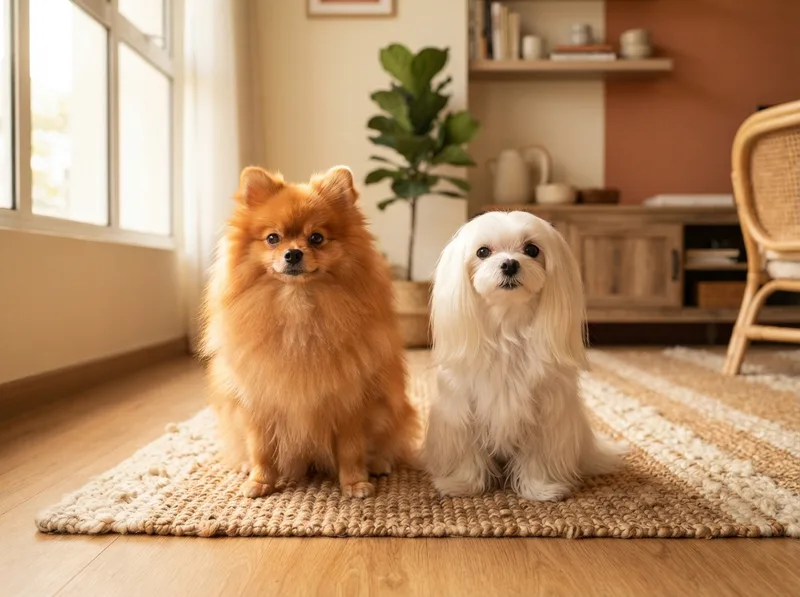
The visual difference is the outline. The Maltese hangs in a straight, flowing white coat, while the Pom is round and stand-off fluffy. Our size guide covers exactly how big a Pomeranian gets, and why we place standard, healthy dogs rather than undersized "teacup" ones.
Size, side by side
- Maltese: under 3 to 4 kg (commonly cited)
- Pomeranian: 1.9 to 3.5 kg (standard)
- Both are small, flat-friendly toy breeds
- Maltese: straight, flowing coat
- Pomeranian: round, stand-off fluffy coat
Coat, shedding and grooming
This is the heart of the decision. The Maltese has a single silky coat with no undercoat, so it sheds very little and rarely leaves loose hair around the home. That low shedding is a genuine draw. The catch is grooming: that fine coat mats quickly and needs daily brushing, plus regular baths, tidy trims and tear-stain care around the eyes.
The Pomeranian has a true double coat, a soft undercoat under longer guard hairs, so it sheds steadily and blows its coat heavily once or twice a year. It needs brushing several times a week and should never be shaved to the skin, because the double coat may not grow back correctly and the coat actually helps the dog cope with heat. See double-coat shedding explained for the full picture. In short: the Maltese sheds less but mats more, and the Pom sheds more but is harder-wearing.
Coat trade-offs
- Maltese: single coat, very low shedding
- Maltese: mats easily, daily brushing
- Maltese: tear-stain care around the eyes
- Pomeranian: double coat, seasonal blow
- Pomeranian: brush several times a week, never shave
Temperament and barking
The Maltese is the gentler personality. It is affectionate, people-oriented and generally content to be a calm companion, which is exactly why it has a long history as a lapdog. It can still bark, especially if bored or under-socialised, but it is usually quieter than a Pom.
The Pomeranian is bolder and more alert. It is a spirited little watchdog that will tell you when something is happening at the door, so it is more vocal by nature and needs early, consistent bark training in a shared block. Read the honest barking guide and Pomeranian character, honestly before you decide. If you want a soft, quiet lapdog above all else, the Maltese is the more natural fit, and that is an honest answer.
Energy, exercise and HDB fit
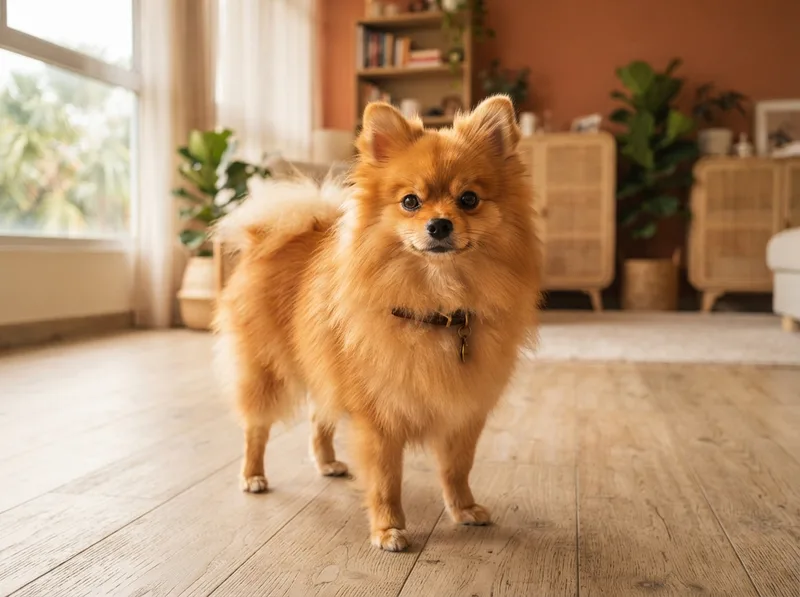
Both breeds have gentle exercise needs that short daily walks and indoor play will meet, so both suit flat living well. Both also feel Singapore’s heat and are best walked in the cooler early morning and evening. Neither is a high-energy dog, though the Pom tends to be a little livelier and more curious than the placid Maltese.
On HDB, the Pomeranian is a clean yes: it is named on HDB’s approved small-breed list, as our guide to HDB rules for small dogs explains. The Maltese is a small toy breed commonly kept in flats and is generally approved too, but confirm it on the current HDB list before committing. Either way, you may keep one approved dog per flat and need an annual AVS licence.
Flat living
- Both: gentle exercise needs, flat-friendly
- Both feel the heat; walk in the cool hours
- Pomeranian: livelier and more curious
- Pomeranian: named on the HDB approved list
- Maltese: confirm on the current HDB list
Which one is right for you?
Choose a Maltese if you want a gentle, quieter, low-shedding companion and you are happy to commit to daily brushing and tear-stain care. It is a wonderful cuddly lapdog for a calmer household, and if that is what you are truly after, we would rather point you there than sell you the wrong dog.
Choose a Pomeranian if you want a bold, characterful small dog with a fluffy showpiece coat and the widest colour range of the small breeds, and you will invest in coat care and basic bark training. If that is you, see our available Pomeranian puppies or compare a Pom against the other small breeds. We are Pomeranian specialists and place Poms only.
Best-owner match
- Maltese: gentle, quiet, low-shedding lapdog
- Maltese: for owners who enjoy daily coat care
- Pomeranian: bold, colourful, fluffy watchdog
- Pomeranian: for owners ready for bark training
- Both: real grooming commitments, worth it
The grooming maths, in minutes and dollars
Low shedding and low maintenance are two different claims, and the Maltese only satisfies the first. Put rough numbers on it. A Pomeranian in full coat takes about 20 to 30 minutes of brushing two to three times a week, so roughly 60 to 90 minutes weekly, plus a salon tidy every 8 to 10 weeks at typical Singapore rates of $60 to $100.
A Maltese kept in full coat needs combing closer to daily, because hair keeps growing and mats form against the skin within days, and it needs the salon every 4 to 6 weeks at a similar per-visit price. That is roughly the same weekly minutes but nearly double the annual salon spend. Owners who keep a Maltese in a short puppy cut cut the home time substantially and increase the salon frequency further. The honest summary is that the Maltese trades a hair-free sofa for a tighter maintenance schedule, and the Pomeranian trades visible shedding for a more forgiving one. Our Pomeranian grooming routine sets out what the double-coat side of that actually involves.
Typical annual grooming
- Pomeranian: 60 to 90 min home brushing weekly
- Pomeranian: salon every 8 to 10 weeks
- Maltese: near-daily combing in full coat
- Maltese: salon every 4 to 6 weeks
- Typical SG salon visit: $60 to $100
- Maltese costs roughly double at the salon
Health, side by side
The shared list is the toy-breed one: luxating patella, tracheal collapse, and dental disease from crowding. Both breeds should walk on a harness, stay lean, and have their teeth brushed several times a week from puppyhood. Both commonly live into their teens.
Their individual reputations differ. The Maltese is commonly cited in connection with white shaker syndrome, a tremor condition seen in small white breeds, and with portosystemic liver shunt, a congenital circulation problem that shows up early. Tear staining is cosmetic but constant on a white coat in a humid climate. The Pomeranian's own signature is alopecia X, which affects the coat rather than the dog's wellbeing. Read either list as things to ask a seller about, not as reasons to rule a breed out.
Breed-specific watch list
- Shared: patella, trachea, dental
- Maltese: white shaker syndrome
- Maltese: liver shunt, congenital
- Maltese: tear staining, cosmetic
- Pomeranian: alopecia X, coat only
- Both: harness, lean weight, dental care
Frequently asked questions
Pomeranian or Maltese, which sheds less?
The Maltese sheds noticeably less. It has a single silky coat with no undercoat, so it drops very little loose hair, which is one reason people choose it. The trade-off is that the coat mats easily and needs daily brushing. A Pomeranian has a double coat that sheds steadily and blows out seasonally, so it sheds more.
Which is quieter, a Pomeranian or a Maltese?
The Maltese is generally the quieter and calmer of the two. It is a gentle, affectionate lapdog, although any small dog can bark if under-stimulated or under-socialised. The Pomeranian is a bolder, more alert watchdog and is more vocal by nature, so it needs early bark training in a shared HDB block.
Which needs more grooming, a Pomeranian or a Maltese?
Both are real grooming commitments, just different ones. The Maltese needs daily brushing to prevent mats plus tear-stain care around the eyes. The Pomeranian needs brushing several times a week and has a heavy seasonal coat blow, and must never be shaved. Neither is a wash-and-go breed.
Is a Maltese more allergy-friendly than a Pomeranian?
The Maltese single coat sheds less and is often described as more suitable for people sensitive to loose hair, but no dog is truly hypoallergenic, since allergens also come from skin and saliva. If allergies are a concern, spend time around the breed before deciding rather than relying on the label.
Which is the better lapdog?
If you want a classic velcro lapdog that is content to be gentle and cuddly, the Maltese leans that way. A Pomeranian enjoys your company too, but it is a spirited, alert dog rather than a passive lap warmer. Choose the Maltese for calm affection and the Pom for character and presence.
Meet your Pomeranian
Come say hello at Balestier
2 Balestier Road #01-701, Singapore 320002 · Weekdays 12pm–6pm · Weekends 10am–6pm. Or message us first: tell us about your home and routine, and we'll tell you honestly if a Pomeranian fits.
Compare more breeds
See how a Pomeranian stacks up against the Chihuahua, Shih Tzu and Japanese Spitz.
Back to all comparisons