Barking guide · By Curious Tails · Updated Jul 2026
Do Pomeranians Bark a Lot? Barking, Explained
The honest answer, why it happens, and a practical plan to manage it. A Pomeranian is an alert little watchdog, so some barking comes with the breed. Here is how to keep it under control in an HDB flat.
Pomeranian puppies
From $4,288, all-in
Do Pomeranians bark a lot?
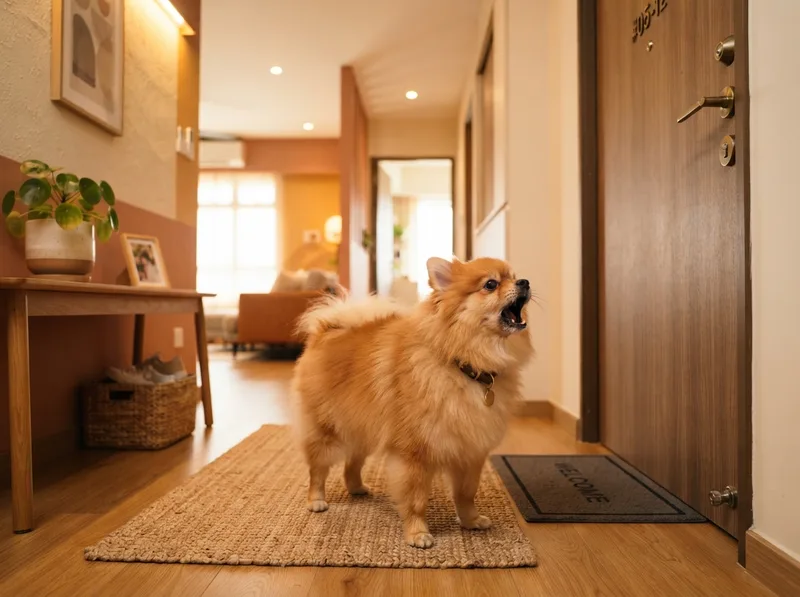
Yes, Pomeranians are talkative. As alert watchdogs they bark to announce visitors, corridor noise and the doorbell, and some bark from boredom, for attention or from mild anxiety when left alone. The reassuring part is that barking is trainable, not eliminable: with early, consistent work most Poms settle into calm flat dogs that only speak up when it matters.
Alert
Watchdog by instinct
Trainable
Manageable, not silenced
★ 5.0
45 Google reviews
HDB ✓
On the approved list
Why Pomeranians are built to bark
The bark is not a flaw, it is the breed doing its job. Behind the pom-pom coat, a Pomeranian is a purebred toy spitz descended from much larger northern working dogs, and it kept the confident, watchful nature of its big ancestors. Poms are alert, self-assured and tightly bonded to their people, so they take it upon themselves to announce anything new. That is exactly why they make such excellent little watchdogs, and it is the flip side of the bold personality owners love.
In a Singapore HDB block there is a lot to announce. Sharp Pomeranian hearing picks up corridor footsteps, the lift chime, a neighbour at the next door and delivery riders long before you notice any of it. None of this makes a Pom a bad flat dog. It simply means barking is something you manage on purpose from day one, the same way you would plan for coat care. Read the full Pomeranian temperament guide for the wider personality picture.
Why a Pom barks
- Alert watchdog instinct (announcing visitors)
- Sharp hearing in a busy HDB block
- Boredom and too little mental stimulation
- Attention-seeking when it has worked before
- Mild anxiety or frustration when left alone
The four triggers behind the noise
Almost every Pomeranian bark falls into one of four buckets, and knowing which one you are dealing with decides your response. Alert barking is the announcement bark at the door, the lift or the window. Boredom barking is the aimless, repetitive noise of a clever dog with nothing to do. Attention barking is the demand bark that has been accidentally rewarded, often by us looking, talking or picking the dog up. Anxiety barking is the distressed, sometimes frantic barking that happens when a Pom is left alone.
The trap is treating all four the same. Ignoring an anxious dog makes anxiety worse, while giving a demanding dog attention makes demands worse. Spend a few days simply noting when your Pom barks and what happened just before, then match the fix to the trigger. That single habit does more than any gadget, and it is where our free first training lesson starts too.
Match the fix to the trigger
- Alert: teach an "enough" cue, then reward calm
- Boredom: more play, chews and puzzle feeders
- Attention: never reward the demand bark
- Anxiety: build up alone-time gradually
- Watch and note the trigger before you react
Barking is trainable, not eliminable
Set your expectations honestly and you will be a much happier owner. The goal is not a silent Pomeranian, because a dog that never alerts is neither realistic nor desirable in a watchdog breed. The goal is a Pom that alerts once or twice, then settles on a cue. Poms are clever and eager, which is the same trait that makes them quick to learn quiet as it makes them quick to learn barking, so the intelligence works in your favour once you channel it.
A reliable method is to let the alert happen, calmly say your cue such as "enough" or "quiet", then the moment the barking pauses, mark it and reward. You are not punishing the alert, you are rewarding the off switch. Keep sessions short and upbeat, reward generously at first, and be consistent across everyone in the home. Reward-based training suits this sensitive little breed far better than shouting or bark collars, which tend to add fear rather than calm.
A simple bark plan
- Let one or two alerts happen, then cue "enough"
- Reward the silence, not the bark
- Keep sessions short and positive
- Be consistent across the whole household
- Never reward door-barking with attention
- Skip shock and citronella bark collars
Worried about barking in a shared block? Tell us about your flat and your daily routine, and we will tell you honestly whether a Pomeranian is a good fit.
Ask on WhatsAppHDB neighbour etiquette
Barking is not just a training question in Singapore, it is a good-neighbour question. The Pomeranian is named on HDB’s approved small-breed list, so the breed itself is welcome, but keeping the peace in a shared corridor is on you. Manage the environment first: reduce what your Pom can see and hear from the door and windows, since a dog that cannot watch the corridor has far less to bark at. Frosted film, a strategically placed sofa or simply closing a line of sight goes a long way.
Then manage the causes. A Pom that has had a walk, a play session and some mental work is a quieter Pom, because a bored dog invents its own entertainment and that entertainment is often loud. Address separation-related barking early rather than hoping it fades, and never leave a distressed dog barking for hours while you are out. If a neighbour raises a concern, take it seriously and act on it. One dog per flat, an annual AVS licence and considerate management keep a Pom a genuinely good HDB citizen.
Good-neighbour habits
- Block the corridor view from the door and windows
- Walk and mentally tire your Pom daily
- Do not leave a Pom barking alone for hours
- Address separation barking early, not "later"
- Take neighbour feedback seriously and act
A day-one training plan for first-time owners
Start bark work the day your puppy comes home, because it is much easier to build a good habit than to unpick a bad one. In the first weeks, focus on calm: reward your Pom for quiet, settled moments, teach a rock-solid "enough" cue in a low-distraction room, and practise short, happy absences so being alone never becomes a crisis. Keep a food pouch handy so you can reward the exact instant the barking stops.
Pair the quiet work with plenty of enrichment. Puzzle feeders, chew toys, short training games and a predictable daily rhythm keep that clever spitz brain busy and take the fuel out of boredom barking. Every puppy we place comes with a free first training lesson with a certified trainer to get this right from the start, and the day-one training plan walks through toilet training, socialisation and bark control step by step. New to the breed? Begin with our complete Pomeranian breed guide.
First-timer priorities
- Reward quiet from day one
- Teach "enough" in a calm room first
- Practise short, happy alone-time
- Use puzzle feeders and chews for enrichment
- Keep a predictable daily routine
- Free first training lesson included
Why an HDB flat makes barking worse
The layout is part of the problem, and once you see it you can fix it. A typical flat has a gated front door opening directly onto a public corridor, and the dog can see and hear everything passing: neighbours, delivery riders, the lift arriving, children coming home from school. That is not a behavioural problem, it is a stimulus problem, and the dog is doing exactly what an alert breed does when you sit it in front of a stream of moving strangers all day.
Change the environment before you try to change the dog. Move the pen or crate out of the direct sightline of the front gate, or put frosted film or a screen across the lower half of the gate so the corridor stops being television. Leave a fan or radio running for sound masking so individual footsteps do not stand out. Vary the walk route so the lift lobby is not a fixed high-arousal event. Most of the cases we hear about improve substantially from those three changes alone, before a single training cue is taught.
Environmental fixes first
- Break the sightline to the front gate
- Move the pen away from the door
- Fan or radio for sound masking
- Vary the walk route past the lift
- Feed the best meal when you leave
- Then start the training cues
If a neighbour has already complained
Deal with the person before you deal with the dog. Knock, apologise properly, and ask what times the barking is worst, because that answer tells you exactly which trigger you are dealing with and you cannot get it from inside your own flat. Most complaints come from people who assume nothing will change; being visibly on it is usually enough to stop the escalation.
Then commit to something specific and time-bound rather than promising to try. Tell them what you are changing, that it takes a few weeks, and give them a way to tell you if it is not working. Keep a short log of when barking happens, because if the matter ever reaches the town council you want a record of the problem and the response rather than a disagreement about memory. Bring in a trainer early rather than late: a complaint that gets a professional involved in week one almost never becomes a formal case. Being on HDB's approved breed list settles whether you may keep the dog and has nothing to say about noise, so the goodwill of the person next door is worth more than the rule.
First 48 hours
- Knock, apologise, ask about timings
- Name one specific change you will make
- Give a realistic timeframe, then meet it
- Start a simple barking log
- Book a trainer in week one, not week six
- Check back with the neighbour yourself
Bark collars and anti-bark devices
Our position is straightforward: we do not recommend them, and on a toy breed with a fragile windpipe we recommend against citronella and static collars specifically. A bark collar punishes the sound without touching the reason for it, so a dog barking from boredom or anxiety gets a second problem layered onto the first, and anxious dogs often escalate rather than settle.
Ultrasonic deterrent boxes have the same flaw with less precision, since they fire at whichever dog is nearest, including one that was quiet. If you are looking at a device because you are out of time and under pressure from a neighbour, that is understandable, and the honest answer is that the device buys you silence today and costs you a more anxious dog in a month. A trainer costs more and works. Every puppy we place includes a free first lesson with an AVS-certified trainer precisely so this is not the point where owners get stuck.
Frequently asked questions
Do Pomeranians bark a lot?
Yes, they can be talkative. Pomeranians are alert little watchdogs, so they sound off at the corridor, the lift, the doorbell and anything new. The key point is that barking is trainable, not eliminable: with early, consistent work most Poms settle into calm flat dogs that only speak up when it genuinely matters.
Can you train a Pomeranian to stop barking completely?
No, and you should not try to. Alert barking is a natural, useful behaviour, and a dog that never barks is not the goal. What you can train is control: a Pom that alerts once or twice, then settles on a cue like "enough" or "quiet". Aim to reduce and manage the noise, not to silence the dog entirely.
Why does my Pomeranian bark at nothing?
It is rarely nothing to your Pom. Sharp Pomeranian hearing picks up corridor footsteps, the lift chime, a neighbour’s door or a bird outside long before you notice. Boredom, wanting attention and mild anxiety when left alone are the other common triggers. Work out which trigger applies before you pick a training response.
Will a Pomeranian disturb my HDB neighbours?
It can if barking goes unmanaged, so etiquette matters in a shared block. Manage window and corridor views, tire your Pom out mentally and physically, never reward door-barking with attention, and address separation-related barking early. A well-trained Pom is a quiet, considerate flat dog that only alerts to real events.
At what age do Pomeranians start barking?
Puppies experiment with small barks and yips from a few weeks old, and the fuller alert bark tends to develop from around three to six months as confidence grows. That early window is the best time to start bark work, because it is far easier to shape a habit than to undo an established one.
Is a bark collar a good idea for a Pomeranian?
We do not recommend shock or citronella bark collars for Poms. They punish the symptom, not the cause, and can create fear or worse anxiety in a small, sensitive dog. Reward-based training that addresses the trigger works better and is kinder. Our free first training lesson with a certified trainer helps you start the right way.
Meet your Pomeranian
Come say hello at Balestier
2 Balestier Road #01-701, Singapore 320002 · Weekdays 12pm–6pm · Weekends 10am–6pm. Or message us first: tell us about your home and routine, and we'll tell you honestly if a Pomeranian fits.
Read the training guide next
Toilet training in a flat, socialisation and bark control, step by step for first-time owners.
See the training guide