Temperament guide · By Curious Tails · Updated Jul 2026
Pomeranian Temperament: What They're Really Like
Bold, alert and affectionate, with a personality far bigger than the body. Here is the honest guide to how a Pomeranian actually behaves, and the owner it suits, from AVS licensed specialists who have placed 30+ Poms.
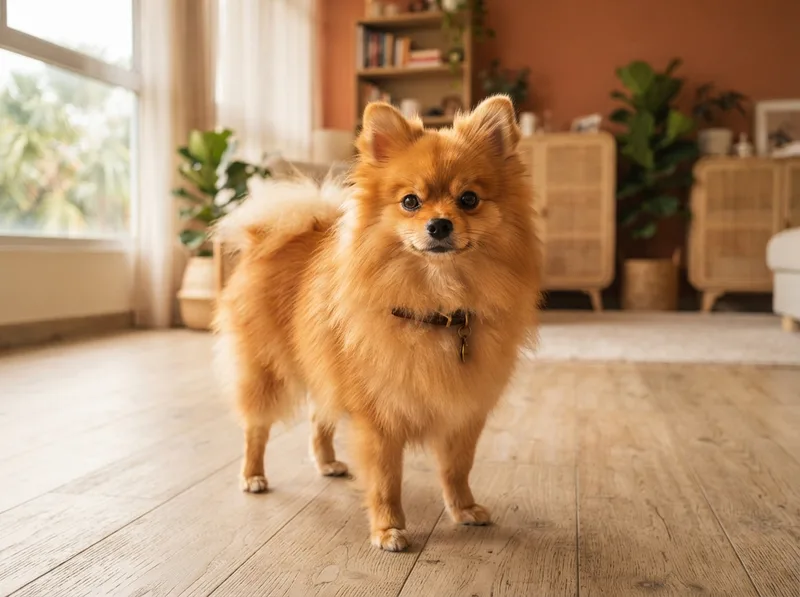
Pomeranian puppies
From $4,288, all-in
What is a Pomeranian's temperament like?
A Pomeranian is confident, alert, curious and affectionate, with a personality far bigger than its 2 to 3 kg frame. It is a spirited little watchdog rather than a quiet lapdog: quick to learn, closely bonded to its people, and quick to speak up at anything new. Give it calm boundaries and early training and it becomes a delightful, characterful flat companion.
Bold
Big personality, tiny body
Alert
A natural little watchdog
Trainable
Quick, eager learner
People-first
Bonds closely with family
A big personality in a tiny body
The first thing owners notice is that a Pomeranian does not behave like a small dog thinks it should. It is self-assured, opinionated and full of character, and it carries itself with a confidence that has nothing to do with its size. That is the charm of the breed and the reason people fall for it, but it is also why a Pom needs an owner who enjoys a dog with a real personality rather than a passive accessory.
Underneath the pom-pom coat is a true spitz brain: clever, watchful and busy. These dogs want to be part of the household, involved in what you are doing, and given something to think about. Understand that from the start and everything else about the temperament makes sense. If you are new to the breed, start with the Pomeranian breed overview for the wider picture.
Temperament in a nutshell
- Confident and self-assured
- Alert, curious and watchful
- Affectionate and people-oriented
- Clever and quick to learn
- Spirited, not a quiet lapdog
- Needs calm, consistent boundaries
Confident, alert and endlessly curious
Pomeranians are naturally alert. Very little happens in the home without a Pom noticing, and that watchfulness is one of the breed's defining traits. They investigate new sounds, new visitors and new objects with real interest, and they are quick to react. It makes them lively, engaged and fun to be around, and it is exactly why they earn their reputation as excellent little watchdogs.
That same alertness is the honest flip side of the breed. A Pom will tell you when the lift arrives, when the corridor creaks and when someone knocks. This is a feature for an owner who wants a dog that pays attention, and a genuine consideration for anyone who wants complete quiet. The instinct is manageable, not a life sentence, which is the whole point of the next section.
The watchful side
- Notices everything in the home
- Investigates new sights and sounds
- Reacts quickly and vocally
- A genuine, alert little watchdog
- Alertness is trainable, not fixed
The vocal side: an honest watchdog
Barking is the trait most people ask about, and we will always be straight about it. A Pomeranian will vocalise at the door, the corridor and things it finds interesting, because alerting the household is what the breed was built to do. The good news is that barking is trainable, not eliminable overnight: with early, consistent work and enough mental stimulation, most Poms settle into calm flat dogs that only speak up when it matters. Our full guide to Pomeranian barking covers exactly how to manage it in a shared HDB block.
Affectionate and people-oriented
For all the boldness, a Pomeranian is a deeply affectionate companion. They form strong bonds with their families, follow their favourite people from room to room, and are happiest when they are included. A Pom that is part of the daily routine is a settled, content dog, which is one reason they suit home-based owners and flat living so well.
They do enjoy lap time, but on their own terms. Most Pomeranians are curious and busy first and cuddlers second, so think engaged and interested rather than passive and clingy. If your idea of the perfect dog is one that sits quietly on your lap all day, a Pom will surprise you with how much it wants to be doing things with you instead.
How they bond
- Forms close family attachments
- Loves being included in the day
- Enjoys lap time on its own terms
- Thrives with home-based owners
- Engaged and busy, not clingy
Highly trainable, if you start early
That spitz cleverness makes the Pomeranian genuinely trainable. They learn quickly, enjoy the mental challenge, and respond beautifully to positive, reward-based methods. Early socialisation and simple manners come together fast when you make training a game. The catch is that the same intelligence means a bored or under-stimulated Pom will happily invent its own entertainment, and that is where unwanted habits begin.
The two priorities we tell every new owner are bark control and boundaries, both started from day one, because shaping a habit early is far easier than undoing it later. Every puppy we place comes with a free first lesson with a certified trainer to get you going. Our guide to training a spirited small dog walks through toilet training in a flat, bark work and socialisation step by step.
Training priorities
- Reward-based methods work best
- Bark control from day one
- Calm boundaries, consistently kept
- Early, gentle socialisation
- Mental stimulation prevents mischief
- Free first lesson included
Avoiding "small-dog syndrome"
Small-dog syndrome is not a temperament a Pomeranian is born with. It is learned behaviour, the bossy, reactive or nippy habits that show up when a bold small dog is allowed to do things no one would let a large dog do. Because Poms are confident by nature, they will take whatever leadership vacuum you give them. Set calm, consistent rules from the first week, ask for the same manners you would from any dog, and you get the best of the breed: a self-assured, well-mannered companion rather than a pushy one.
Who a Pomeranian is perfect for
A Pomeranian is a wonderful match if you want a small, striking, HDB-friendly dog with a huge personality, and you will invest in coat care and basic bark training. Owners who are home a fair amount, enjoy a characterful and interactive dog, and like the idea of an alert little companion that is genuinely interested in their day tend to adore the breed. First-time owners do very well too, as long as they know what they are signing up for.
If that sounds like you, the Pom rewards you with years of loyal, entertaining company. They travel well in a carrier, settle happily into flat life, and their exercise needs are modest, a couple of short walks plus indoor play. It is a lot of dog in a very small, very portable package.
A great fit if you
- Want a characterful small dog
- Are home a reasonable amount
- Will do basic bark training
- Enjoy regular coat care
- Like an alert, interactive companion
Who should look at another breed
We would rather talk you out of the wrong breed than sell you the wrong dog. A Pomeranian is probably not for you if you need a silent dog for a noise-sensitive block and will not do bark training, if you have no time or budget for regular coat care, or if you specifically want a calm, quiet, low-energy lapdog that mostly sleeps. A bold, vocal, busy little spitz is simply the opposite of that brief.
There is no shame in wanting a softer, quieter, more velcro-style lapdog. It just is not the Pomeranian, and a gentler small breed will make you both happier. Being honest about this is the whole reason we specialise: matched owners keep their dogs for life, and that is the only outcome we are interested in.
Maybe not, if you
- Need a totally silent dog
- Will not do bark training
- Have no time for coat care
- Want a passive, sleepy lapdog
- Want a rugged jogging companion
Not sure the Pomeranian personality fits your home and routine? Tell us about your flat and your days, and we will tell you honestly.
Ask on WhatsAppCan a Pomeranian be left alone?
An adult Pomeranian copes with about four to six hours alone once it is settled, has been fed and walked, and has something to do. A puppy manages far less, roughly its age in months plus one, in hours, which means a three-month-old is asking for a break every four hours whether or not that suits your calendar.
A full working day, 8am to 7pm, is beyond what this breed handles well, and the failure mode is not a sad dog quietly waiting. It is barking, which in a shared corridor becomes your neighbour's problem before it becomes yours. If nobody is home during the day, plan for a midday visit, a walker, or a different breed. What actually helps: leave with no ceremony and return with no ceremony, feed the most interesting meal of the day as you go out, block the view of the corridor so passing footsteps stop being an event, and build the alone time in ten-minute increments from week one rather than testing it on day one of your return to the office. The rest of the noise question is in the barking guide.
Realistic alone time
- 2 months: about 3 hours
- 4 months: about 5 hours
- Adult: 4 to 6 hours comfortably
- Full working day: not this breed
- Build it up in 10-minute steps
- Puzzle feeder beats a quiet room
Pomeranians with children, other dogs and cats
With respectful older children, a Pomeranian is excellent: playful, tireless and genuinely interested in whatever the household is doing. With toddlers it is a harder call, and the risk runs in both directions. A 2.5 kg dog is injured by a fall from a sofa or a misjudged hug, and a startled small dog that has learned nobody listens to it will eventually say so with its teeth. Neither outcome is the dog's fault. If your children are under about six, wait or supervise properly rather than hoping.
With other dogs, Pomeranians are generally sociable and thoroughly unaware of their own size, which is its own risk around large boisterous dogs at the park. With cats they usually do well, because the prey drive is mild and a confident cat settles the hierarchy quickly. Pomeranians living with cats covers the introduction properly. The variable that matters more than species is the socialisation window between about eight and sixteen weeks: what a puppy meets calmly in that period, it accepts for life.
Household fit
- Children 6+: excellent, with rules
- Toddlers: supervise, or wait
- Resident cat: usually fine, introduce slowly
- Resident dog: usually fine, size-match play
- Large boisterous dogs: supervise at the park
- Socialisation window: 8 to 16 weeks
Where the angry Pomeranian reputation comes from
Enough people search for angry Pomeranian that it is worth answering directly. Aggression is not a breed trait here. What people are usually describing is a small, confident dog that has learned its warnings work, because for its whole life humans have picked it up mid-protest, laughed at the growl, or removed the thing it was worried about the moment it made noise.
Small dogs get away with behaviour nobody would tolerate from a Labrador, and the result is a dog that escalates because escalating has always worked. The fix is unglamorous and effective: train the same manners you would train into a 30 kg dog, stop lifting the dog out of situations it is trying to handle, and let it learn that calm gets rewarded. A Pomeranian that has been treated like a dog rather than an accessory is a friendly, confident, straightforward animal.
Frequently asked questions
What is a Pomeranian’s temperament like?
A Pomeranian is confident, alert, curious and affectionate, with far more personality than its size suggests. It is a spirited little watchdog rather than a quiet lapdog: quick to learn, bonded to its people, and quick to sound off at anything new. With calm boundaries and early training it settles into a wonderful flat companion.
Are Pomeranians good pets?
Yes, for the right owner. Poms are loving, entertaining and genuinely interested in your day, and they suit flat living. They are not a wash-and-go breed though: they are vocal, they need coat care, and they do best with owners who enjoy a characterful dog and will put in basic bark training and socialisation.
Are Pomeranians affectionate and cuddly?
Very. Pomeranians bond closely with their people and love to be involved in whatever the household is doing, from the sofa to the kitchen. They enjoy lap time on their own terms, but most are busy, curious little dogs first and cuddlers second, not passive velcro lapdogs that sit still all day.
Do Pomeranians get small-dog syndrome?
They can, if a bold small dog is given no rules. Small-dog syndrome is learned behaviour: bossy, reactive or nippy habits that appear when owners let a tiny dog do things they would never allow a large one. Calm, consistent boundaries from day one prevent it and keep the Pom confident, not pushy.
Are Pomeranians good with children and other dogs?
Generally yes, with sensible supervision. Poms are sociable and playful, but they are small and can be hurt by rough handling, so they suit gentle, older children best. Early socialisation helps them stay relaxed around other dogs. Their watchdog instinct means they may vocalise first and make friends second.
Is a Pomeranian a good first dog?
For an owner who wants a characterful small breed and will do the work, yes. Poms are clever and eager to please, which makes training rewarding. The honest caveats are barking and coat care. If you want a silent, low-effort lapdog, a softer breed will suit you better than a Pomeranian.
Meet your Pomeranian
Come say hello at Balestier
2 Balestier Road #01-701, Singapore 320002 · Weekdays 12pm–6pm · Weekends 10am–6pm. Or message us first: tell us about your home and routine, and we'll tell you honestly if a Pomeranian fits.
Read the barking guide next
The one honest trait everyone asks about, and exactly how to manage it in an HDB flat.
See the barking guide