Colour guide · By Curious Tails · Updated Jul 2026
Pomeranian Colours: The Complete Guide
From the iconic orange to cream, parti, chocolate and black, the Pomeranian has the widest colour range of any small breed. Here is the honest guide to every core shade we place, plus an educational look at merle.
Pomeranian puppies
From $4,288, all-in
What colours do Pomeranians come in?
Pomeranians come in the widest colour range of any small breed, more than ten recognised shades. The colours we place are orange, sable, cream, white, parti, chocolate, black and tan, and black, with orange being the iconic shade. Rarer patterns such as merle and blue exist but are not part of the core colours we offer. Puppy coats also change and settle as the dog matures.
10+
Recognised coat colours
Orange
The iconic shade
8
Core colours we place
Widest
Range of any small breed
Why Pomeranians come in so many colours
The Pomeranian carries a remarkably broad set of coat colours and patterns, more than almost any other small companion breed. That variety comes from its spitz heritage and generations of selective breeding, and it is one of the real joys of the breed: whether you love a classic foxy orange or a dramatic parti pattern, there is a Pom that fits your taste.
Colour, though, is the last thing that should drive a decision. A healthy, well-socialised puppy with a sound temperament matters far more than a fashionable shade, and any breeder leading with rare-colour hype is selling the wrong thing. Choose the dog first and the colour second. The coat itself, and how it sheds and grows, is covered in what the double coat does year-round.
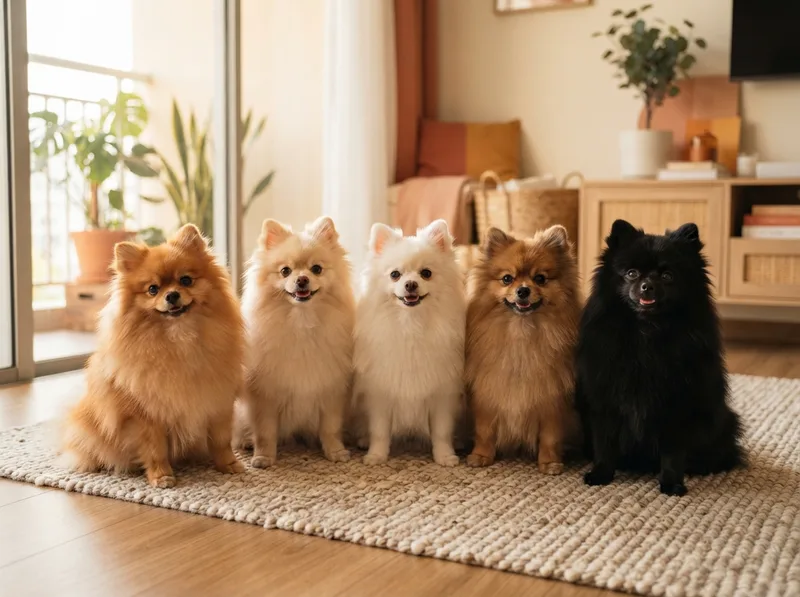
The core colours we place
These are the eight shades we most often place with Singapore families. Each is a purebred Pomeranian, just in a different coat.
Orange
The iconic Pomeranian shade, from deep red-orange through to lighter tangerine. This is the colour most people picture when they think Pom.
Sable
A lighter base coat with individual hairs tipped in a darker shade, giving a shaded, dimensional look. Orange sable and cream sable are common.
Cream
A soft, pale coat that sits between white and light orange. Warm, understated and very popular for its gentle, teddy-bear look.
White
A clean, bright all-white coat. A true, even white is prized and harder to produce well than it looks, with no stray cream or lemon shading.
Parti
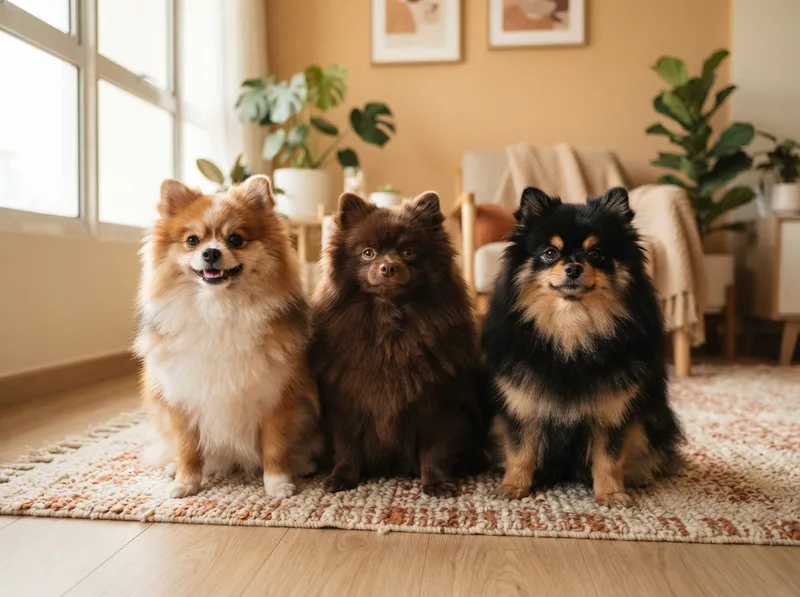
A mostly white coat broken by patches of a second colour. Every parti pattern is a genuine one-off, so no two dogs are marked quite the same.
Chocolate
A warm brown coat carried through to the nose and points as brown pigment rather than black. Ranges from milk to deep chocolate.
Black & tan
A black coat with defined tan markings on the face, chest, legs and under the tail. Crisp, classic and full of contrast.
Black
A solid, glossy jet-black coat with black pigment throughout. A well-pigmented black Pom is genuinely striking in the fluff.
The white Pomeranian
A white Pomeranian is one of the most searched-for looks in the breed, and for good reason: a clean, even, snow-white coat is genuinely eye-catching. It is also harder to produce well than people expect. A true white carries no stray cream, lemon or biscuit shading, and that even pigment is not common, which is part of why white Poms attract so much attention.
A white coat asks for a little more upkeep in daily life, since tear staining and grubby paws show more against the bright fur. Regular brushing and gentle face cleaning keep a white Pom looking its best. If a bright, fluffy white is your dream, tell us and we will let you know when one is available.
About white Poms
- A clean, even white with no shading
- Prized and less common than it looks
- Shows tear staining and dirt more
- Needs regular face and coat cleaning
- A purebred Pom, just a rarer shade
The black Pomeranian
At the other end of the palette, a solid black Pomeranian is dramatic and often underrated. A good black is a deep, glossy jet with black pigment right through the nose, lips and pads, and no rusty or faded patches. That even, well-pigmented black is harder to breed than the common orange, which is why a striking black Pom turns heads.
Do not confuse a normal black coat with a coat condition. Black skin disease, also called alopecia X, is an unrelated hair-loss issue that shows as bald, darkened skin, not a coat colour. A healthy black Pom simply has a beautiful dark coat. Our health and lifespan guide explains alopecia X in full so you know the difference.
About black Poms
- Deep, glossy jet-black coat
- Black nose, lips and pads
- Harder to breed well than orange
- A coat colour, not a condition
- Not the same as alopecia X
Merle Pomeranians: the honest caveat
Merle is a mottled, marbled pattern that can look spectacular, and it is one of the most hyped Pomeranian colours online. We cover it here for education, because buyers ask, but we do not market merle as part of our core stock. The reason is genuine, not marketing caution. The merle gene comes with a real health caveat that an honest specialist has to explain.
A single-merle dog is usually healthy. The problem is breeding two merle parents together, which can produce so-called double-merle puppies with a much higher risk of deafness and eye defects. Responsible practice never pairs two merles, and any seller pushing merle-to-merle litters for the pattern is putting looks before welfare. That is exactly why merle sits outside our core placed colours.
Merle, honestly
- A striking marbled pattern
- Single-merle dogs are usually fine
- Two merle parents is the real risk
- Linked to hearing and sight defects
- Covered for education, not sold as core stock
Does a Pomeranian's colour change as it grows?
Very often, yes, and it catches new owners off guard. A Pomeranian's puppy coat is not always the colour it will wear as an adult. Many pups darken or shift shade as the adult coat comes in, and sable puppies in particular can look quite different once mature, as the black tipping develops. Cream and orange tones can also deepen or soften with age.
Layered on top of that is the normal adolescent thinning stage, affectionately called the "puppy uglies", around four to eight months, when the puppy coat drops before the full adult coat arrives. It is not a defect and it is not a reason to shave. The final colour and full showpiece coat settle as the dog matures. See how a coat changes as it matures for the whole timeline.
Coat colour over time
- Puppy coat often differs from adult
- Many coats darken with age
- Sable changes the most
- "Puppy uglies" around 4 to 8 months
- Final colour settles at maturity
Have a colour in mind? Availability changes weekly. Tell us what you are hoping for and we will share this week's Pomeranian puppies and the all-in price.
Ask on WhatsAppOrange and sable, the classics
Orange is the Pomeranian colour most people picture when they hear the breed name, and it is the most common in our litters. It ranges from a light apricot through to a deep, almost red rust, and the same dog can look like two different colours in daylight and under a warm lamp. If you grew up seeing Pomeranians in photographs, orange is almost certainly what you saw.
Sable is not a colour so much as a shading pattern. Each guard hair carries a black tip over a lighter base, so the coat reads as orange or cream with a darker overlay across the back and ears. Orange sable is the common version. Wolf sable is the striking one: a grey base with black tipping and a distinct facial mask, closer in appearance to a miniature Keeshond than to a typical Pom. Sable puppies change the most as they mature, because the tipping recedes as the adult coat comes through and a very dark puppy can clear into something noticeably lighter.
Orange and sable
- Orange: apricot through to deep rust
- Most common colour in our litters
- Sable: black-tipped guard hairs over a lighter base
- Orange sable: the usual version
- Wolf sable: grey base, black tipping, facial mask
- Sable puppies change the most with age
Every other colour, described
American sources spell it colors and often list these as types of Pomeranian or Pomeranian varieties. The coats are the same either way; only the vocabulary changes.
| Colour | What it looks like | We place it |
|---|---|---|
| Cream | Pale gold to off-white, warmer than true white, dark nose and eye rims | Yes |
| Parti | White base with defined patches of another colour, usually orange or black | Yes |
| Chocolate | Warm brown throughout, with a brown nose and eye rims rather than black | Yes |
| Black and tan | Solid black with tan points above the eyes, on the muzzle, chest and legs | Yes |
| Blue | Diluted black reading as slate grey, with a grey nose rather than black | Occasionally |
| Beaver | Diluted chocolate, a soft dusty brown with light eyes | Occasionally |
| Lavender | A dilute of a dilute, greyish-mauve, genuinely uncommon | No |
| Merle | Mottled patches over a base colour, often with blue eyes | No, see below |
Does colour affect price, health or temperament?
Temperament, no. There is no evidence that coat colour predicts anything about how a Pomeranian behaves, and any seller who tells you black Poms are calmer or white ones are gentler is describing individual dogs they happen to remember.
Health, only in one case. Merle is the exception, and the risk sits in merle-to-merle pairings that can produce double merles with hearing and vision defects. A single merle dog from a responsibly chosen pairing is not inherently unhealthy. Every other colour on this page, including the dilutes, carries no general health penalty, though dilute coats occasionally come with more sensitive skin.
Price, yes, and that is a market fact rather than a quality one. Colours perceived as uncommon attract a premium because buyers will pay it. We price on the puppy, not the shade, and our range stays $4,288 to $4,888 all-in whatever colour you choose. Ask us for the colours we currently have rather than deciding on a shade before you have met a dog.
Colour, honestly
- Temperament: no link
- Health: no link, except merle pairings
- Price: a market premium, not a quality signal
- Our price is the same for every colour
- Choose the puppy, then the colour
Frequently asked questions
What colours do Pomeranians come in?
Pomeranians have the widest colour range of any small breed, more than ten recognised shades. The colours we place are orange, sable, cream, white, parti, chocolate, black and tan, and black. Orange is the iconic shade. Rarer patterns such as merle exist but are not part of the core coat colours we offer.
What is the rarest Pomeranian colour?
A true, even white and a solid, well-pigmented black are both harder to breed well than they look, and merle and blue are genuinely uncommon. Rarity is often overstated in marketing though. We would always choose a healthy, well-tempered puppy over chasing a rare shade, whatever the colour.
Do Pomeranian puppies change colour as they grow?
Often, yes. Many puppy coats shift or darken as the adult coat comes in, and sable puppies especially can look quite different by adulthood. There is also a normal thinning stage, the "puppy uglies", around four to eight months. The final colour and full coat settle once the dog matures.
Are white Pomeranians more expensive?
Colour can affect the asking price in the wider market because some shades are harder to produce, but at Pomeranian.sg pricing is based on health, temperament and the full all-in package, not coat colour. Our puppies are from $4,288 all-in regardless of shade. Never let a rare-colour claim rush a decision.
Are merle Pomeranians healthy?
A single-merle dog is usually fine, but the merle gene carries a real caveat. Breeding two merle parents together can produce puppies with hearing and sight problems, which is why responsible practice never pairs two merles. We cover merle for education only and do not market it as part of our core stock.
What colour is a Pomeranian usually?
Orange is by far the most recognised and common Pomeranian colour, which is why the breed is so associated with that warm, foxy look. Sable and cream are also very common. White, parti, chocolate, black and tan, and black round out the core colours we place for Singapore families.
Meet your Pomeranian
Come say hello at Balestier
2 Balestier Road #01-701, Singapore 320002 · Weekdays 12pm–6pm · Weekends 10am–6pm. Or message us first: tell us about your home and routine, and we'll tell you honestly if a Pomeranian fits.
See the coat and shedding guide
How the double coat works, the seasonal coat blow, and the brushing routine that keeps any colour looking its best.
See the coat guide