Cross-breed guide · By Curious Tails · Updated Oct 2026
Pomeranian mixes: every cross Singapore buyers ask about
Pomeranian mixes in Singapore cost about $2,500 to $6,000 and run from a 2kg Pomchi to a 15kg Pomsky, and only some are legal in an HDB flat. Here are the seven crosses buyers ask about, and which ones clear the HDB rule.

Pomeranian puppies
From $4,288, all-in
Are Pomeranian mixes legal in an HDB flat?
A cross is HDB-approved only when both parents appear on the HDB approved dog list. A Pomchi, Pomapoo, Maltipom, Yorkie-Pom, Shiranian or Dameranian clears that test. A Pomsky does not, because the Siberian Husky is not on the list.
7
Crosses people ask about
1.9–3.5 kg
The Pomeranian parent
2 of 2
Parents must be approved
Not approved
Pomsky, because of the Husky
What a Pomeranian mix actually is
It is a first-generation cross between a purebred Pomeranian and another purebred dog. The Pomeranian is almost always the smaller parent, because that is where the size and the coat come from.
It is not a breed. There is no kennel club standard for a Pomchi, a Pomapoo or a Pomsky, so no agreed size, coat or temperament exists for anyone to hold a seller to.
Two litters of the same cross can produce dogs that look and behave differently. That is the trade for the variety, and it is worth understanding before you fall for a photo of a puppy.
The practical consequence is simple. Judge the individual dog in front of you, not the label in the listing, and ask for the parents' adult weights rather than trusting a predicted size.
The vocabulary
- Cross = Pomeranian plus another purebred
- Not a recognised breed, no standard
- F1: first generation
- F1b: crossed back to a Pomeranian
- Outcome varies by litter
Why people cross a Pomeranian
Three reasons, and only two are reliable. The first is size: the Pomeranian brings a tiny frame, which matters in a Singapore flat.
The second is coat. Crossing a double-coated dog with a lower-shedding breed can produce a dog that leaves less hair on the floor, though it does not reliably.
The third is temperament, and this is where marketing outruns evidence. A cross is not automatically calmer or healthier. It inherits from two dogs, and which parent dominates is not something a breeder can promise in advance.
The seven crosses Singapore buyers ask about
These are the ones people actually ask us about, with the adult size to plan for rather than the size on a listing. Sizes are ranges because a cross has no standard.
A Pomchi is a Pomeranian crossed with a Chihuahua, usually 2 to 5kg, sharp and alert. A Pomapoo uses a Toy Poodle and lands nearer 3 to 6kg with a curlier coat.
A Maltipom crosses the Pomeranian with a Maltese for a 2 to 4kg lap dog. A Yorkie-Pom with a Yorkshire Terrier runs 2 to 4kg and is one of the more energetic of the group.
A Shiranian uses a Shih Tzu and sits around 3 to 6kg with a softer coat. A Dameranian puts the Dachshund shape under a Pomeranian coat, at 4 to 9kg, and keeps the voice of both parents.
The seventh is the Pomsky, which gets its own section below because it behaves differently both in size and in law. Our Pomchi guide goes deeper on the most-searched of the small crosses, and the Pomeranian versus Chihuahua comparison covers the two parents directly.
Adult size to plan for
- Pomchi: 2-5kg
- Maltipom: 2-4kg
- Yorkie-Pom: 2-4kg
- Pomapoo: 3-6kg
- Shiranian: 3-6kg
- Dameranian: 4-9kg
- Pomsky: 5-15kg and unpredictable
The Pomsky: why it is the exception
A Pomsky is a Pomeranian crossed with a Siberian Husky, usually produced by artificial insemination because the size difference makes natural breeding unsafe.
Adult size is genuinely unpredictable, ranging from Pomeranian-sized to much larger. So is the temperament, which carries working sled-dog drive that a flat in a tropical city is a poor match for.
It is also the one cross on this page that fails the HDB rule, because the Siberian Husky is not on the approved list. If you want to meet one anyway, our sister brand Curious Tails places them at their Pomsky page, and we would rather send you there than pretend to sell a dog we do not have.
What a Pomeranian mix costs in Singapore
Most locally placed small crosses fall between about $2,500 and $6,000, depending on the cross, the coat and what the price includes. A Pomsky usually costs more, and costs more to keep as well.
The purchase price is only the first number. Running cost is dominated by grooming, then food, then routine vet care, and it scales with body weight. The AVS dog licence is $13.50 a year for a sterilised dog.
Compare the inclusion list rather than the headline. A licensed seller who handles the licence, supplies a starter kit and delivers the puppy is quoting a different product from a classified advert quoting a smaller number for the dog alone.
For what a purebred costs here, and what is included, the what a Pomeranian costs lays the figures out in full.
Are Pomeranian mixes HDB approved?
This question decides the purchase in Singapore, and almost no ranking guide answers it. The rule is simple: a cross is permitted only when both parent breeds appear on the HDB approved dog list.
Both the Pomeranian and the Chihuahua are listed, so a Pomchi is legal in a flat. The Toy Poodle, the Maltese, the Shih Tzu, the Yorkshire Terrier and the Dachshund are all listed too.
That makes the Pomapoo, Maltipom, Shiranian, Yorkie-Pom and Dameranian legal as well. One approved dog is allowed per flat, and the licence transfers with the dog.
The Siberian Husky is not on the list, which is why a Pomsky is not approved. Keeping an unapproved dog carries a penalty of up to $4,000 and the real risk of being told to rehome it. Our HDB guide sets out the rules for residents.
The one rule that matters
- Both parents must be on the approved list
- Pomchi, Pomapoo, Maltipom: approved
- Shiranian, Yorkie-Pom, Dameranian: approved
- Pomsky: not approved (Husky not listed)
- One approved dog per HDB flat
- Private housing: up to three dogs
The coat, the grooming and the voice
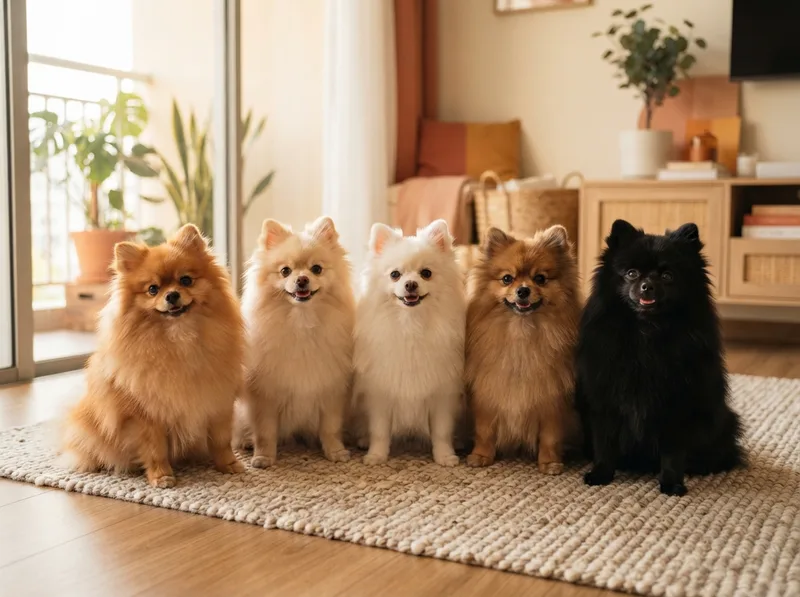
The coat is the least predictable thing about a cross. A puppy may inherit the Pomeranian double coat, the other parent's shorter coat, or something in between, and neither parent tells you which.
Plan for brushing at least three times a week and a professional groom every four to six weeks. Skipping the cycle produces matting, and dematting costs more than the visits you missed.
The voice is more predictable. Almost every cross on this page is alert and vocal, because that is the Pomeranian side, and they announce every visitor.
Early socialisation is what keeps the barking manageable, and it is easier to build in the first month than to unwind at two years. Our shedding and coat carecovers the brushing routine in detail.
Which Pomeranian mix is right for you?
Start with size, not with a photo. Two adults in a four-room flat can comfortably keep anything up to a Pomapoo. A small apartment with one person working long hours suits a Maltipom or Yorkipoo small.
Then look at the week rather than the weekend. A Dameranian is vocal and needs more walking than its size suggests, while a Shiranian is gentler and easier to settle.
A Pomapoo is the most trainable of the small group, which makes it the better first dog if you have not owned one before. A Pomchi is sharper and quicker to notice everything, which suits an experienced household more than a first-time one.
Then be honest about coat work. Every cross here needs a groom every four to six weeks, and the curlier the coat the more brushing happens in between.
If that is not realistic, a shorter-coated breed is a better choice than a neglected cross. A neglected double coat mats against the skin and becomes a welfare problem, not a styling one.
A mix or a purebred Pomeranian?
A purebred gives you a predictable adult size, coat and temperament. In a flat, that predictability is worth a great deal, because you know what you are bringing home before you commit.
A cross gives you variety and sometimes a lower-shedding coat. It also gives you more variance, which is fine if you are flexible about adult size and coat type.
Neither is better. They are different bets, and the guide to the Pomeranian itself explains what the purebred version of this dog actually is.
Not sure whether a cross or a purebred fits your flat? Tell us the household and the hours you are out, and we will give you a straight answer rather than a sales one.
Ask on WhatsAppWhere to meet these dogs in Singapore
We place purebred Pomeranians here at Pomeranian.sg. Pomskys are placed by our sister brand Curious Tails, which is a disclosed sister brand of the shop behind this site.
Our own puppies are at 2 Balestier Road #01-701, weekdays 12pm to 6pm and weekends 10am to 6pm. Come and meet them, and ask the questions you actually have. A viewing costs nothing.
Whoever you buy from, check the AVS licence number on the public registry of licensed pet shops before a deposit changes hands. Ours is AS24J00046.
Browse the Pomeranian puppies currently with us, or read our Pomeranian pages and message us on WhatsApp.
Frequently asked questions
What is a Pomeranian mix?
A cross between a purebred Pomeranian and another purebred dog. It is not a recognised breed, so there is no standard for size, coat or temperament, and two litters of the same cross can look quite different.
Are Pomeranian mixes HDB approved in Singapore?
Only when both parents are on the HDB approved dog list. A Pomchi, Pomapoo, Maltipom, Yorkie-Pom, Shiranian or Dameranian clears that test. A Pomsky does not, because the Siberian Husky is not approved.
What is the best Pomeranian mix?
There is no single best. For a flat, a Pomchi or Maltipom at the small end is the easiest fit, and a Pomapoo is the calmer choice for a family that wants a sturdier dog. The right cross is the one that matches your week.
What is a Pomsky?
A Pomeranian crossed with a Siberian Husky. Adult size is genuinely unpredictable, from Pomeranian-sized to much larger. Because the Husky is not on the approved list, a Pomsky is not HDB-approved.
Do Pomeranian mixes shed?
Less predictably than the purebred. A cross may inherit the Pomeranian double coat, the other parents coat, or something in between. Plan for brushing three times a week and a groom every four to six weeks.
How much does a Pomeranian mix cost in Singapore?
Most locally placed small crosses fall between about $2,500 and $6,000 depending on the cross and the inclusions. A Pomsky usually costs more, and costs more to feed and groom as well.
Are Pomeranian mixes good dogs?
They can be excellent. What matters is health screening in the parents, early socialisation and an honest seller. A cross is not automatically healthier or calmer than a purebred, whatever the listing says.
Is a Pomeranian aggressive?
No, but it is alert and vocal, and that reads as aggression on a small dog. Pomeranians announce visitors. Training and socialisation from the first week make the difference.
Do you sell Pomeranian mixes?
We place purebred Pomeranians at Pomeranian.sg. Pomskys are placed by our sister brand Curious Tails, and we link you there rather than pretend to sell a dog we do not have.
Should I choose a mix or a purebred Pomeranian?
A purebred gives you a predictable adult size, coat and temperament, which matters in a flat. A cross gives you variety and sometimes a lower-shedding coat. Both are good dogs; they are different bets.
Meet your Pomeranian
Come say hello at Balestier
2 Balestier Road #01-701, Singapore 320002 · Weekdays 12pm–6pm · Weekends 10am–6pm. Or message us first: tell us about your home and routine, and we'll tell you honestly if a Pomeranian fits.
See the Pomchi in detail
The most-searched Pomeranian cross explained: size, coat variance, HDB status and what to check before buying.
Read the Pomchi guide