By Curious Tails · AVS licensed
Pomeranian Puppy Uglies: The Coat Stage Explained
Your fluffy puppy suddenly looks thin, scruffy and half-bald, and you are convinced something is wrong. Almost always, it is the puppy uglies: a completely normal adolescent coat stage. Here is what is happening and when the showpiece coat comes back.
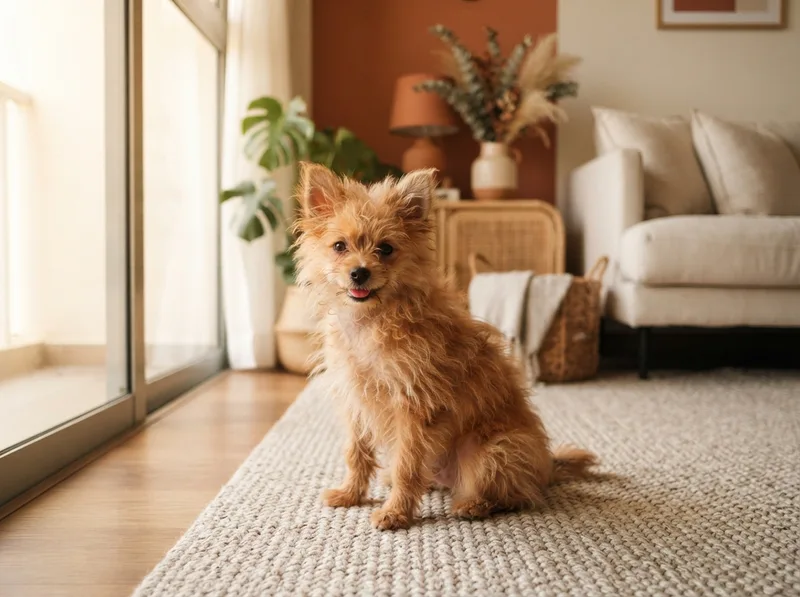
Pomeranian puppies
From $4,288, all-in
What are Pomeranian puppy uglies?
Puppy uglies are the normal adolescent coat stage when a young Pomeranian sheds its soft puppy fluff before the dense adult double coat grows in. It commonly starts around 4 to 8 months and the full coat returns by roughly 12 to 15 months. The dog looks thin and uneven, but the skin stays covered.
4–8 mo
Typical onset
12–15 mo
Full coat back by
No bare skin
Normal stage rule
Never shave
The one hard rule
Why your fluffy puppy suddenly looks scruffy
A Pomeranian is born in a soft, even puppy coat, all undercoat and no real structure. Somewhere in adolescence that puppy coat has to make way for the adult double coat: a dense undercoat topped with the long, straight guard hairs that give a grown Pom its round, stand-off ruff. The two coats do not swap over neatly. The puppy fluff sheds out first, and for a few months the adult guard coat has not yet caught up.
The result is a gawky, half-dressed teenager. The body looks thin, the coat is patchy and uneven, ears and face often keep more fur than the back and rump, and the whole dog can look a size smaller than it did at twelve weeks. Owners see it, panic, and assume the puppy is sick, poorly bred, or somehow not the breed they were promised. In the vast majority of cases it is none of those things. It is the puppy uglies, and it is one of the most-searched Pomeranian worries for a reason.
Signs it is just the puppy uglies
- Coat looks thin and uneven, not bald
- Skin stays covered by short fur everywhere
- Face and ears often keep more fur than the body
- Dog is otherwise bright, eating and playing normally
- Started somewhere in the 4 to 8 month window
When it starts and when it ends
Timing genuinely varies from dog to dog, which is why owners online give wildly different answers. As a working rule, the puppy uglies commonly begin somewhere between 4 and 8 months, look their worst in the middle of that window, and resolve as the adult coat fills in by roughly 12 to 15 months. Some Poms are through it faster, and a slower coat can take until closer to 18 months to reach full plumage.
Coat colour and coat type play a part too, and so does the seasonal shedding cycle. What you should not do is measure your dog against a photo of a fully coated adult and conclude something is wrong at eight months. A young Pom simply is not finished yet. The coat and shedding guide covers the adult double coat and the seasonal coat blow you will manage for the rest of the dog's life.
A rough coat timeline
- Birth to ~4 months: soft, even puppy coat
- ~4 to 8 months: puppy coat sheds, uglies begin
- ~8 to 12 months: adult guard coat filling in
- ~12 to 15 months: full adult double coat
- Then: normal shedding plus seasonal coat blows
Normal coat drop versus a real warning sign
Here is the single most useful thing an owner can learn, and it comes straight from experienced Pomeranian people: during the normal puppy uglies you should not see bare skin. The coat thins and looks ragged, but short fur still covers the body. If instead you see genuine bald patches of exposed skin, that is a different situation and it is worth a vet check.
The condition owners most often confuse with the puppy uglies is alopecia X, sometimes called black skin disease, where the coat is lost in a symmetrical pattern and the skin can darken. It tends to spare the head and lower legs while the body and tail thin out or go bald. We break the two apart in the Pomeranian black skin disease guide. Skin conditions, parasites and hormonal issues can also cause real hair loss, so bare skin is always a reason to ask your vet rather than wait it out. Our guide to Pomeranian health and lifespan covers the small-breed conditions worth knowing.
See a vet if you notice
- Actual bald patches of exposed skin
- Symmetrical hair loss on the body or tail
- Skin turning dark, flaky, red or itchy
- The dog scratching, chewing or off its food
- No regrowth well past 15 to 18 months
The one thing not to do: panic-shave
When a Pom looks its scruffiest, the tempting fix is to shave it down and start fresh. Do not. Shaving a double coat can cause it to grow back patchy, woolly or slow (post-clipping alopecia), strips out the insulation that actually helps a Pom cope with Singapore heat, and leaves skin open to sunburn. The puppy uglies fix themselves. Keep brushing gently, keep feeding well, and let the adult coat arrive on its own schedule.
How to help the coat through the stage
You cannot rush the adult coat, but you can support it and keep the dog comfortable. Brush gently a few times a week with a slicker and a comb to lift out the shedding puppy fur before it mats, paying attention to the friction spots behind the ears, under the legs and around the collar area. Regular brushing also lets you check the skin, which is exactly how you would catch a bare patch early.
Feed a complete, good-quality puppy diet so the coat has what it needs to grow, keep up parasite prevention, and book tidy grooming rather than a shave if you want the dog neat in the meantime. A teddy or boo trim is a tidy-up, not a clip to the skin. Beyond that, patience is the whole treatment.
What to do instead of shaving
- Brush gently a few times a week
- Use brushing to check the skin stays covered
- Feed a complete quality puppy diet
- Keep up flea, tick and worm prevention
- Book a tidy trim, never a shave to the skin
Worried your Pom's coat is not right? Send us a photo. We have raised a lot of Pomeranians through this stage and will tell you honestly if it is the normal uglies or worth a vet visit.
Ask on WhatsAppWhat each stage actually looks like
When do puppy uglies end is the question every thread argues about. Owners find the timeline frustrating because every forum thread gives a different answer, and the reason is simple: individual dogs vary by months. What is consistent is the sequence, so it is more useful to work out which stage your dog is in than to argue about its age.
Between roughly three and five months the puppy still looks like a puppy, though the coat starts to feel less dense under your hand before it looks different. From four to eight months the transition shows: the body coat thins, the legs look longer than they should, and the tail plume goes wispy. This is the point at which most owners start searching. From six to nine months the dog looks its most awkward, often with a narrow fox-like face, a body coat that lies flat instead of standing off, and almost no ruff. From nine to twelve months the guard hairs return first and the dog begins to look structured again, though the neck is usually last. Between twelve and fifteen months the ruff fills and the adult coat settles. Two things worth holding on to: the coat almost always comes back fuller than the puppy coat was, and the skin should stay covered throughout.
Stage by stage
- 3 to 5 months: feels thinner, looks normal
- 4 to 8 months: body thins, legs look long
- 6 to 9 months: the awkward peak, no ruff
- 9 to 12 months: guard hairs return
- 12 to 15 months: ruff fills, coat settles
- Skin stays covered at every stage
No, you were not sold a mix
This is the fear underneath a large share of the anxious posts, and it deserves saying out loud rather than being tiptoed around. At seven months, with a flat coat, a narrow muzzle and no ruff, a purebred Pomeranian genuinely does not look like the dog in the photographs, and owners start wondering whether they were sold something else.
They almost never were. The adult Pomeranian silhouette is created by the coat, not the frame, and during the transition the frame is all you can see. The bone structure, the ear set, the tail carriage over the back and the general proportions do not change; the fluff that rounds them off is simply absent for a few months. If you want reassurance beyond that, look at the tail: it should still curl over the back even when the plume is thin, and look at the ears, which stay small, triangular and set close. Both are structural rather than coat features. Every purebred Pomeranian we place goes through exactly this, and it is the question owners most often bring back to us around month seven.
Frequently asked questions
How long do Pomeranian puppy uglies last?
The stage usually runs a few months. It commonly starts between 4 and 8 months of age and the full adult coat is normally in by roughly 12 to 15 months. Every dog is different, so some Poms clear it faster and a few take until closer to 18 months. If your Pom is well past that with a patchy coat, ask your vet.
At what age do Pomeranian puppy uglies start?
Most Pomeranians hit the puppy uglies somewhere between 4 and 8 months, as the soft puppy coat sheds out before the dense adult double coat grows in. It often looks worst in the middle of that window, when the fluffy puppy fur is mostly gone but the guard coat has not yet filled the gaps.
Should I shave my Pomeranian during the puppy uglies?
No. Never shave a Pomeranian to fix an awkward coat. Shaving a double coat risks the fur growing back patchy or woolly (post-clipping alopecia), removes the insulation that helps a Pom cope with Singapore heat, and exposes skin to sunburn. The puppy uglies resolve on their own. Keep brushing and wait it out.
How do I know it is puppy uglies and not alopecia X?
The key test is bare skin. During the normal puppy uglies the coat looks thin and uneven, but the skin stays covered by short fur. If you see actual bald patches of exposed skin, especially symmetrical loss on the body while the head and legs keep fur, that is not typical puppy uglies and warrants a vet visit.
Meet your Pomeranian
Come say hello at Balestier
2 Balestier Road #01-701, Singapore 320002 · Weekdays 12pm–6pm · Weekends 10am–6pm. Or message us first: tell us about your home and routine, and we'll tell you honestly if a Pomeranian fits.
Learn the adult coat
Next: how the double coat sheds, the seasonal coat blow, and the brushing routine that keeps it neat.
Read the coat guide